
CELEBRITY
🚨 SPANISH ROYAL FAMILY UNDER PRESSURE: Princess Leonor’s Growing Role as Future Queen Sparks Fierce Debate About the Monarchy’s Future, Public Expectations and Whether Spain Is Ready for a New Generation of Royal Leadership!

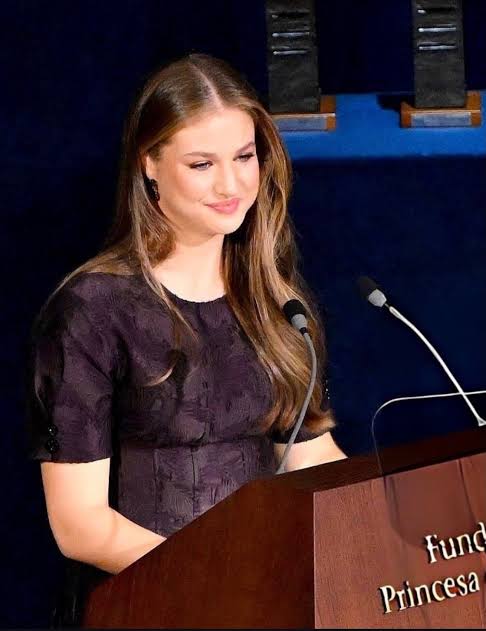
Spain’s royal family is facing renewed public scrutiny as Princess Leonor gradually steps into a more prominent position within the monarchy, bringing fresh attention to the future of the Spanish Crown and the expectations surrounding its next generation of leadership.
As the eldest daughter of King Felipe VI and Queen Letizia, Leonor occupies a unique position in Spain’s constitutional monarchy. Her preparation for the throne has become an increasingly important part of the royal family’s long-term strategy, with her public appearances, military education and growing institutional responsibilities attracting considerable attention.
However, her emergence comes at a time when the Spanish monarchy is confronting difficult questions about public confidence, transparency and its relevance to younger generations.
PRINCESS LEONOR’S GROWING RESPONSIBILITIES
Leonor’s journey towards becoming Spain’s future queen has involved extensive preparation.
Her military education, which includes training across Spain’s Army, Navy and Air and Space Force, is designed to prepare her for the constitutional responsibilities associated with the Crown.
Under Spain’s constitutional framework, the monarch holds the position of head of state and exercises specific ceremonial and institutional responsibilities.
The importance of Leonor’s military training is also connected to the constitutional provision that the future queen will eventually assume supreme command of the armed forces.
Her increasing involvement in official engagements represents another important stage in her preparation.
For the royal household, introducing the heir to greater public responsibilities is part of ensuring continuity between Felipe VI’s reign and the next generation.
SPAIN’S MONARCHY FACES DIFFICULT PUBLIC QUESTIONS
Despite Leonor’s growing prominence, the future of the Spanish monarchy cannot be separated from wider public attitudes towards the institution.
A study published in May 2026 by researchers at the University of Murcia revealed a divided picture of public opinion.
According to the research, 51.5% of respondents preferred a republic, compared with 48.5% who supported a parliamentary monarchy. The study also found that 53.8% expressed little or no satisfaction with the institution.
Interestingly, Leonor emerged as the best-rated member of the Spanish royal family in the research.
These findings highlight an important distinction: public appreciation for an individual royal figure does not necessarily translate into unquestioning support for the institution she is expected to lead.
That distinction could become increasingly important as Leonor takes on more responsibilities.
WHY THE NEXT GENERATION MATTERS
One of the biggest challenges confronting European monarchies is maintaining a meaningful connection with younger generations.
Today’s younger citizens are growing up in a society where public institutions are increasingly expected to demonstrate transparency, accountability and an understanding of contemporary social concerns.
For Leonor, this creates a complicated balancing act.
She must prepare to uphold centuries of royal tradition while representing a generation whose expectations of public leadership may differ considerably from those of previous generations.
Her education, public engagements and ability to communicate the responsibilities of the Crown will therefore remain important subjects of public attention.
The question is not simply whether Leonor will eventually inherit the throne. It is also how the monarchy will evolve during the years leading up to that moment.
KING FELIPE VI’S LEGACY AND THE FUTURE OF THE CROWN
King Felipe VI has spent his reign attempting to strengthen the institution’s public image and establish a clearer distinction between his leadership and controversies associated with the previous generation.
His daughter now represents an important part of the monarchy’s long-term future.
However, the transition between generations will involve more than introducing a younger royal figure to official engagements.
The institution must also address broader questions surrounding public trust, transparency and its constitutional position in modern Spain.
Leonor’s growing visibility could help the royal household communicate its plans for the future, but public confidence will ultimately depend on more than her personal popularity.
IS SPAIN READY FOR A NEW GENERATION OF ROYAL LEADERSHIP?
The debate surrounding Princess Leonor reflects a much bigger question about the future of monarchy in contemporary Europe.
Supporters of the Spanish Crown see her preparation as an opportunity to preserve institutional continuity while introducing a younger perspective.
Critics, meanwhile, question whether hereditary leadership remains the most appropriate arrangement for a modern democratic society.
Both perspectives demonstrate why Leonor’s future role is attracting attention beyond the royal household.
For now, she remains the heir to the Spanish throne, continuing her preparation while King Felipe VI carries out his constitutional duties.
But as her responsibilities expand, public expectations are likely to grow alongside them.
One thing is becoming increasingly clear: Princess Leonor’s future will not be judged solely by the royal title she inherits, but also by the relationship between the monarchy and the Spanish people.
Whether the next generation strengthens the Crown’s position or intensifies existing questions about its future remains one of the most significant discussions surrounding Spain’s royal family.

SAD NEWS: Prince William and Princess Catherine Rushed for Emergency Medical Attention After Terrifying Mumbai Rickshaw Accident! King Charles Reportedly Receives Devastating News as Palace Officials Face Growing Questions About the Couple’s Condition. But What Happened to Catherine Moments After the Rickshaw Plunged Into the Water Has Left Royal Watchers Deeply Worried

President Trump joins world leaders for a Family Photo at the APEC gathering in China, greeting Chinese President Xi Jinping and other leaders before they pose together the moment comes as Trump meets with international leaders for high-level diplomatic talks.

12 A.M. BUCKINGHAM HORROR! With eyes brimming with tears, William stood as the final pillar of the monarchy, announcing a catastrophic loss. Anne and the princes were called in at once — Harry excluded. Then, a wail of despair echoed through the hall: ‘My brother… oh God… you have

🔥🚨 PURE CHAOS AT THE 38TH PARALLEL! TRUMP STUNS THE WORLD BY STEPPING INTO NORTH KOREA — BUT HIS BODYGUARDS’ PANICKED REACTION STEALS THE SHOW! SECURITY AGENTS APPEAR ON HIGH ALERT AS TENSIONS EXPLODE IN A HEART-STOPPING MOMENT THAT HAS THE INTERNET GOING WILD! 😱🌍

♥️🔥🚨Meghan Markle, 45, spotted sharing a deeply intimate moment with Prince William, 44, at a UK beach without Prince Harry and Kate Middleton, unaware they were being photographed, as one shocking detail about Meghan’s look raises big questions👀

💔 PRINCE WILLIAM DEVASTATED! Emotional Royal Update About His Father, King Charles, Leaves Fans Heartbroken as Palace News Sparks Concern..We are sorry to Announce…..

🚨 ROYAL FANS STUNNED! Strange Mark on Princess Katherine’s Hand Sparks Questions During Mumbai Metro Ride — But What Prince William Did as She Fell Asleep Has Everyone Talking! 😳

🚨🚨 BREAKING!!! 17 minutes ago King Charles finally makes huge announcement following his heart-breaking health update as ‘bits are dropping off’.

BREAKING: King Charles Left SOBBING After Receiving Devastating News About Prince Harry in Ukraine! His Heartbreaking Reaction Has Left Royal Fans in Tears, as One Palace Insider Reveals the Painful Words King Charles Could Barely Bring Himself to Say…

King Charles issues heart-breaking health update as ‘bits are dropping off’

🚨 BREAKING: Trump Hints at Kim Jong Un Meeting During China Trip, But What Happened After His Interview Has Raised BIG Questions! After Tapping His Leg, Trump Appeared to Stumble and Fall While Walking Away, Sparking Fresh Concerns About His Health, Questions Over His Fitness to Remain President, and Renewed Calls From Critics for His Impeachment! 👀
