
CELEBRITY
👑 THE FUTURE QUEEN UNDER FIRE: Princess Leonor’s Increasing Visibility Sparks a Fierce Debate Over Royal Privilege, Public Expectations and Whether the Spanish Monarchy Can Win Over a New Generation!

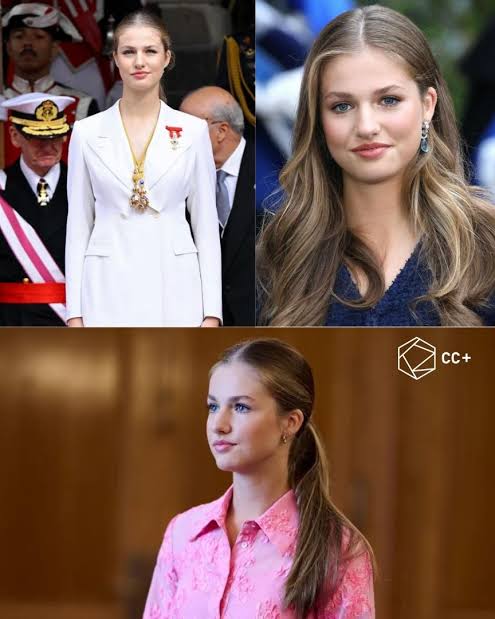
Spain’s future queen is increasingly finding herself at the centre of a national conversation about privilege, tradition, public responsibility and the future of the monarchy.
Princess Leonor, the eldest daughter of King Felipe VI and Queen Letizia, has gradually become one of the most visible figures within the Spanish Royal Family. As heir to the throne, her public responsibilities continue to expand, attracting attention not only from royal watchers but also from citizens questioning what the monarchy should represent in modern Spain.
Her growing profile has brought admiration, curiosity and criticism, creating an increasingly complicated conversation about the institution she is expected to lead one day.
A Future Queen Facing Growing Expectations
Leonor’s journey towards the Spanish throne has involved an extensive education, military training and increasing participation in official royal engagements.
Her transition into university life has added another dimension to public interest in her future. In September 2026, she began studying political science at Madrid’s Carlos III University, bringing renewed attention to her academic development and the expectations surrounding her position.
However, her privileged circumstances have also attracted questions.
Some observers argue that royal privilege inevitably creates a different experience from that of ordinary Spanish students. Others point out that her position comes with responsibilities and restrictions that distinguish her life from that of other young people.
The central question is whether the future queen can establish a meaningful connection with citizens whose experiences are very different from her own.
Royal Privilege and Public Accountability
The debate surrounding Leonor extends beyond her personal popularity.
Spain is a parliamentary monarchy, meaning the royal family’s position is defined by the country’s constitutional framework. Nevertheless, public support remains an important consideration for the institution’s long-term standing.
Critics of hereditary monarchy question whether a position inherited through birth is compatible with modern democratic expectations.
They argue that public institutions should be judged by transparency, accountability and their contribution to society rather than historical tradition alone.
Supporters, meanwhile, maintain that the monarchy provides continuity and represents an established constitutional institution.
For Leonor, these competing perspectives will form part of the environment in which she prepares for her future role.
Can Princess Leonor Connect With Younger Spaniards?
Perhaps the most significant challenge facing the future queen is connecting with a generation that approaches traditional institutions differently.
Younger citizens increasingly expect public figures to demonstrate authenticity, accessibility and an understanding of contemporary social issues.
A September 2026 report by EL PAÍS examined the phenomenon often described as Leonormanía, exploring the attention surrounding her university experience and her growing visibility among younger audiences.
However, the report also highlighted an important distinction: public fascination with a royal personality does not necessarily translate into support for the monarchy itself.
That distinction could become particularly important as Leonor takes on more responsibilities.
Being popular in photographs, at public ceremonies or on social media is one thing. Building lasting confidence in an institution is an entirely different challenge.
The Monarchy’s Own Reputation Remains Under Scrutiny
Leonor’s future cannot be separated entirely from the history of the Spanish Royal Family.
Although King Felipe VI has sought to establish a different image for the modern monarchy, the institution continues to face questions about transparency, privilege and its relationship with the public.
A University of Murcia study published in May 2026 found significant dissatisfaction with Spain’s monarchy. Its findings highlighted the continuing challenges facing the institution, even as individual members of the royal family receive different public assessments.
This creates an interesting situation for Leonor.
She is being introduced as a symbol of generational renewal, but she is also inheriting an institution whose public reputation remains contested.
Her future role will therefore involve more than representing royal tradition. It will also require navigating difficult conversations about the monarchy’s place in contemporary Spanish society.
A Defining Chapter for Spain’s Future Queen
For now, Leonor remains focused on her education, preparation and growing responsibilities as Princess of Asturias.
Her increasing visibility has made her an important figure in discussions about Spain’s royal future, but the wider question remains unresolved.
Can a younger generation of royal leadership bring renewed public confidence to an institution facing questions about hereditary privilege and democratic accountability?
There are different opinions across Spanish society, and Leonor’s personal popularity should not be confused with unanimous support for the monarchy.
What is clear is that expectations surrounding the future queen are growing.
As King Felipe VI’s reign continues, attention will increasingly turn towards the woman expected to succeed him.
For Princess Leonor, the challenge is not simply preparing to wear the crown. It is understanding what that crown will mean to a changing Spanish society — and whether the institution behind it can maintain public confidence in the generations ahead.

🚨🇺🇸 BREAKING: DONALD TRUMP MAKES MAJOR MOVE AGAINST SANCTUARY CITIES! He Announces a Suspension of Federal Funding, Triggering a Fierce Nationwide Debate! SUPPORTERS AND CRITICS ARE DIVIDED — IS THIS THE RIGHT MOVE FOR AMERICA? 🔥🇺🇸 YES OR NO? WHAT’S YOUR TAKE? 👇

SAD NEWS: Prince William and Princess Catherine Rushed for Emergency Medical Attention After Terrifying Mumbai Rickshaw Accident! King Charles Reportedly Receives Devastating News as Palace Officials Face Growing Questions About the Couple’s Condition. But What Happened to Catherine Moments After the Rickshaw Plunged Into the Water Has Left Royal Watchers Deeply Worried

President Trump joins world leaders for a Family Photo at the APEC gathering in China, greeting Chinese President Xi Jinping and other leaders before they pose together the moment comes as Trump meets with international leaders for high-level diplomatic talks.

12 A.M. BUCKINGHAM HORROR! With eyes brimming with tears, William stood as the final pillar of the monarchy, announcing a catastrophic loss. Anne and the princes were called in at once — Harry excluded. Then, a wail of despair echoed through the hall: ‘My brother… oh God… you have

🔥🚨 PURE CHAOS AT THE 38TH PARALLEL! TRUMP STUNS THE WORLD BY STEPPING INTO NORTH KOREA — BUT HIS BODYGUARDS’ PANICKED REACTION STEALS THE SHOW! SECURITY AGENTS APPEAR ON HIGH ALERT AS TENSIONS EXPLODE IN A HEART-STOPPING MOMENT THAT HAS THE INTERNET GOING WILD! 😱🌍

♥️🔥🚨Meghan Markle, 45, spotted sharing a deeply intimate moment with Prince William, 44, at a UK beach without Prince Harry and Kate Middleton, unaware they were being photographed, as one shocking detail about Meghan’s look raises big questions👀

💔 PRINCE WILLIAM DEVASTATED! Emotional Royal Update About His Father, King Charles, Leaves Fans Heartbroken as Palace News Sparks Concern..We are sorry to Announce…..

🚨 ROYAL FANS STUNNED! Strange Mark on Princess Katherine’s Hand Sparks Questions During Mumbai Metro Ride — But What Prince William Did as She Fell Asleep Has Everyone Talking! 😳

🚨🚨 BREAKING!!! 17 minutes ago King Charles finally makes huge announcement following his heart-breaking health update as ‘bits are dropping off’.

BREAKING: King Charles Left SOBBING After Receiving Devastating News About Prince Harry in Ukraine! His Heartbreaking Reaction Has Left Royal Fans in Tears, as One Palace Insider Reveals the Painful Words King Charles Could Barely Bring Himself to Say…

King Charles issues heart-breaking health update as ‘bits are dropping off’
